What Tampa Bay Rideshare Passengers Must Know Now
Rideshare apps make it easy to get around Tampa Bay, especially when traffic is heavy and parking is a headache. But when your Uber or Lyft ride ends in a crash, everything gets confusing very fast. You are hurt, your phone is buzzing, people are talking over each other, and you may not know what to do next.
Late summer in our area is busy on the roads. Kids are heading back to school, tourists are wrapping up trips, and storm season can bring sudden downpours and low visibility. All of this means more rideshare trips and a higher chance of accidents for passengers who are just trying to get home, to work, or to the airport.
Rideshare crashes are different from a regular fender bender. Multiple insurance policies may apply, and you are not the driver, you are a paying passenger using a company app. A rideshare accident attorney in Tampa Bay can help you understand your rights, deal with the insurance puzzle, and avoid mistakes that can hurt your claim later.
When a Rideshare Trip Turns Dangerous
A simple ride across town can change in seconds. Rideshare drivers often work long hours and rely on their phones to keep their business going. That mix can lead to risky choices behind the wheel. Common causes of rideshare accidents in Tampa Bay include:
- Drivers paying more attention to the app than the road
- Speeding to squeeze in one more trip before a break
- Heavy traffic near beaches, bars, stadiums, and downtown hot spots
- Sudden storms that make roads slick and hard to see
- Tourist drivers slowing down, stopping short, or making last-minute turns
You are legally considered a rideshare passenger when the driver has accepted your ride request in the app and is on the way to you, when you are being picked up and are getting into the car, and when you are already in the vehicle and the trip is active in the app. This matters because different insurance rules may apply during each phase of the ride, and the app status often controls which policy is on the hook.
Many people think only their own rideshare driver could be at fault. In reality, several parties might share blame, including another car that caused the collision, your rideshare driver if they were careless or distracted, a commercial truck, delivery van, or company vehicle, or even a bar or restaurant that overserved a drunk driver who later caused the crash. Sorting out who is legally responsible is not always clear on the day of the accident, and it often takes a careful review of the facts.
Who Pays After a Tampa Bay Rideshare Crash
Money for injuries after a rideshare crash can come from different insurance layers. This is where things get tricky, even for people who have dealt with car insurance before. There can be:
- The rideshare company's insurance policy
- The rideshare driver's personal auto insurance
- Another at-fault driver's liability coverage
- Your own auto insurance, including Personal Injury Protection
Which coverage applies depends a lot on what the driver was doing at the time:
- App off: The driver is off the clock, their personal insurance is usually first in line
- App on, waiting for a ride: Limited rideshare coverage may apply, plus personal insurance
- En route to a passenger: Higher rideshare company coverage usually kicks in
- Actively transporting a passenger: This is often when the strongest rideshare coverage is in place
Even when coverage exists, passengers often run into process problems. For example, low settlement offers may come in quickly before injuries are fully understood, and insurance companies may blame each other to avoid paying. You may also face pressure to give recorded statements right away and get confusing questions about who was at fault and which policy should cover what.
Talking with a rideshare accident attorney in Tampa Bay before answering questions or signing papers can help protect your claim.
Steps to Take as a Passenger After a Collision
Right after a crash, your safety and health come first. If you can, take these steps:
- Call 911 and report the crash
- Ask for paramedics if you feel any pain or dizziness
- Leave the vehicle if it is unsafe to stay inside
- Get checked by a doctor as soon as possible, even if you think you are okay
Your phone can be a powerful tool at the scene. If it is safe and you are able:
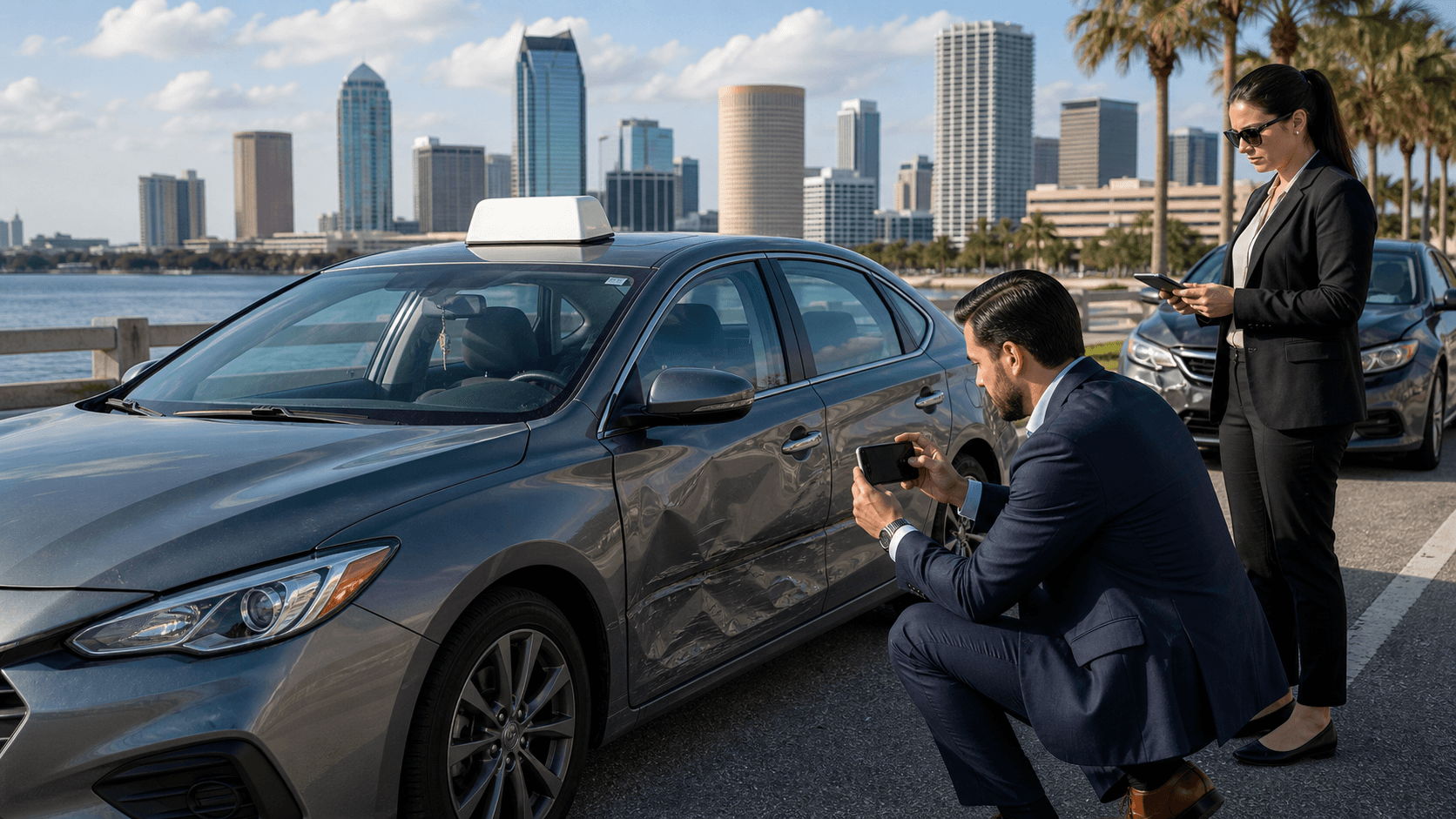
- Take photos and videos of the vehicles, damage, skid marks, and street signs
- Get clear pictures of the rideshare vehicle, including the license plate
- Screenshot the trip screen in your app that shows the driver, route, and time
- Save contact and insurance details for all drivers involved
- Ask for names and numbers of any witnesses
- Note the crash report number and the officers on scene
It also helps to avoid early mistakes that can come back to hurt your claim:
- Do not apologize or accept blame, even to be polite
- Do not post photos or comments about the crash on social media
- Do not skip or delay medical treatment if something feels off
- Do not accept a fast settlement before you know how serious your injuries are
Even minor soreness can later turn into something more serious. Medical records from right after the crash can make a big difference later.
How Florida Law Affects Your Rideshare Claim
Florida law has special rules that can affect how much money you can recover after a rideshare accident. One key rule is modified comparative negligence. This means fault can be shared. Even as a passenger, insurance companies may try to argue that something you did made your injuries worse, like not wearing a seatbelt. If they succeed, it can cut down the amount you receive and in some cases may bar recovery.
Florida is also a no-fault state for car insurance, which means Personal Injury Protection, or PIP, usually helps pay part of your medical bills and lost wages, no matter who caused the crash. As a rideshare passenger, PIP from your own policy, or a household member's policy, may come into play along with rideshare and third-party insurance. Knowing who pays first and how much each policy owes is not always simple.
There are also strict deadlines. Waiting too long to bring a claim can mean you lose the right to recover at all. Delays in getting medical care can also give insurance companies an excuse to say you were not really hurt in the crash.
A rideshare accident attorney in Tampa Bay can keep track of time limits, collect the right records, and help you avoid legal traps that are easy to miss when you are focused on healing.
Protect Your Rights with Focused Legal Help
When a rideshare crash injures a passenger, careful investigation matters. A personal injury firm like Massaro Law can:
- Review police reports and the crash scene details
- Secure app data about the trip, timing, and driver status
- Seek vehicle black box information in serious crashes
- Gather medical records and work with your doctors
- Consult with experts when needed to explain how the crash happened and how injuries affect daily life
Passengers may be able to seek compensation for:
- Emergency treatment, doctor visits, and hospital care
- Physical therapy and future medical needs
- Lost wages or reduced ability to work
- Pain, suffering, and loss of enjoyment of normal activities
- Long-term effects that change how you move, sleep, or handle daily tasks
Rideshare accidents can leave you feeling unsure of where to turn. Understanding your rights as a passenger, the way insurance coverage shifts with driver status, and the impact of Florida law can help you take the next step with more confidence.
Protect Your Rights After a Rideshare Crash Today
If you were injured in an Uber or Lyft collision, our team at Massaro Law is ready to help you understand your options and pursue the compensation you deserve. As an experienced rideshare accident attorney in Tampa Bay, we know how to navigate complex insurance policies and aggressively advocate for your interests. Reach out today to tell us what happened and get clear guidance on your next steps, or contact us to schedule a free consultation.