Your Guide to Protecting Your Rights After a Water Crash
Boating in Tampa Bay and Pasco County is supposed to be fun. Long days on the water, sunsets near the Skyway, sandbars full of families and friends. But when a careless boater, a bad rental, or a sudden crash ruins that day, you are left hurt, scared, and unsure what to do next.
We want you to know this: What you do in the hours and days after a boating accident can make a huge difference in your future. Boat crashes are not handled the same way as car wrecks. Different laws can apply, different courts might get involved, and insurance often works in a very different way. If you are not careful, you can say or sign something that harms your right to fair compensation.
On the water, there can be questions about whether Florida law, federal maritime law, or both will control your case. There might be multiple owners, a rental company, or a tour operator trying to protect themselves. That is why fast, informed action, along with guidance from a boating accident attorney in Tampa Bay, helps protect your rights while you focus on healing.
First Steps After a Tampa Bay Boating Accident
Your first job after any crash on the water is safety. Some people try to shrug off an accident because they do not want to ruin everyone's day. Please do not do that. Your health and life are more important than any boat or vacation.
Right after a boating accident, try to:
- Move yourself and others out of immediate danger if you can
- Put on life jackets and help anyone in the water if it is safe
- Call 911 as soon as possible
- Contact the Florida Fish and Wildlife Conservation Commission, also called FWC
Get medical care right away, even if you feel "mostly fine." Many injuries, like head injuries, neck injuries, or internal injuries, can show up later. A quick check at an ER or urgent care also helps document your injuries for a future claim.
Florida has rules about when you must report a boating accident. You usually need a report when someone is hurt, someone passes away, a person disappears, or there is significant property damage. At the scene, try to gather:
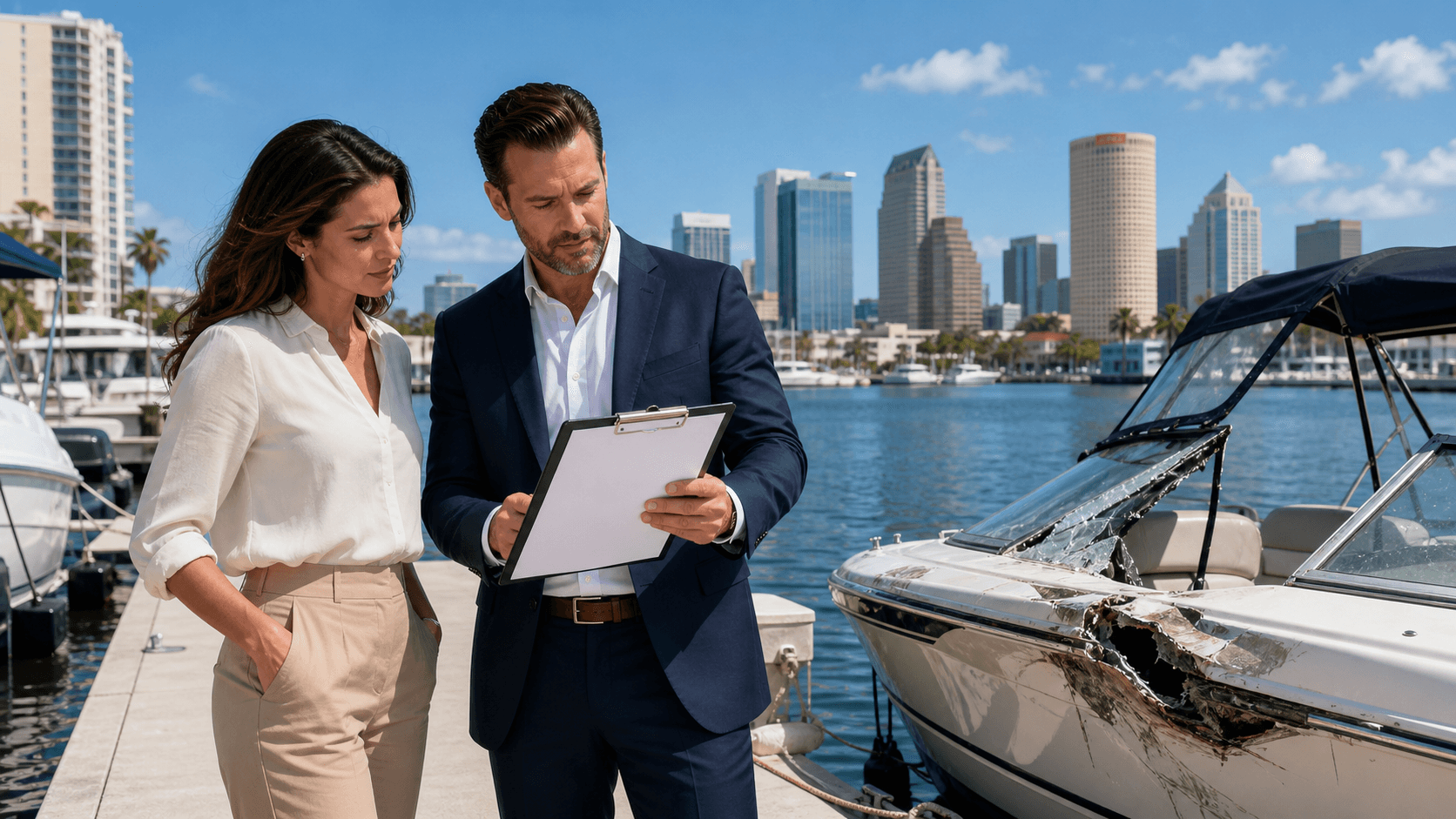
- Photos and videos of the boats, damage, and the area
- Names and contact details for witnesses
- Operator and owner information for every boat involved
- Vessel registration and any insurance details shared
Stay calm and stick to the facts. Avoid these common early mistakes:
- Apologizing or saying the crash was "your fault"
- Giving a recorded statement to any insurance company on the spot
- Signing forms from a rental or tour company without legal advice
- Posting about the crash on social media or sharing blame online
A simple "I am not ready to talk about this yet" is okay. You can hold off until you understand your rights.
How Florida Boating Laws Affect Your Injury Claim
Boating accidents are shaped by both Florida law and sometimes federal law. That mix can be confusing, which is why many injured people feel lost at first.
Some common rules that can affect your claim include:
- Boating under the influence, also called BUI
- Speed limits and no-wake zones
- Rules for passing, crossing paths, and right-of-way
- Requirements for lights, safety gear, and lookouts
If another operator breaks these rules, that can help show they were careless. But responsibility is not always on the person holding the wheel. Depending on the crash, we may also look at:
- Boat owners who let an unsafe or untrained person operate
- Rental or charter companies that fail to maintain boats or give proper instructions
- Tour operators that push unsafe speeds or ignore bad weather
- Manufacturers of defective parts or faulty safety equipment
Where the accident happened can change which laws apply. A crash in the Gulf, one in the middle of Tampa Bay, and one on an inland lake might be handled in different courts. That location detail can affect deadlines, procedures, and who can be sued. Sorting all of that out is part of how we protect your claim.
Insurance, Medical Bills, and Proving Your Damages
Boating insurance is not the same as car insurance. Florida auto laws like personal injury protection do not work the same way on the water. There may be:
- A boat insurance policy for the owner or operator
- Homeowner's coverage that applies to certain boating accidents
- Commercial policies for charters, rentals, or tours
Each policy can have different limits, exclusions, and filing rules. It takes careful review to find all possible coverage.
While we handle the legal side, we ask clients to focus on documenting how the accident has affected their lives. Helpful proof includes:
- All medical records, test results, and doctor notes
- A list of medications, therapies, and follow-up visits
- Pay stubs or employer notes showing missed work
- Receipts for repairs or replacement of damaged property
Your pain and daily struggles matter too. It is helpful to keep a simple journal where you write down:
- Where you hurt and how strong the pain feels
- Things you can no longer do or now struggle with
- Activities with family, friends, or hobbies that you miss
This kind of proof, along with photos, expert opinions, and witness testimony, can show how deeply the accident changed your life and health, not just your medical bills.
Why You Need a Boating Accident Attorney in Tampa Bay
Boating cases can move quickly behind the scenes. Rental companies may repair or move a boat. GPS devices can be wiped. Marina cameras might record over older video. Having a boating accident attorney in Tampa Bay helps make sure important evidence is requested and preserved.
An attorney can:
- Gather GPS data, maintenance records, and company policies
- Work with investigators, accident reconstruction experts, and medical experts
- Handle all talks with insurance adjusters and company lawyers
- Push back when someone tries to blame you unfairly
There are also strict time limits. Florida has deadlines for filing injury cases, and special rules can apply if a government boat or agency is involved. Some insurers or rental companies may try to push a quick, low offer before you know the full impact of your injuries. Once you sign a release, you usually cannot go back for more.
Local experience matters. A Tampa Bay trial lawyer who knows the waterways, marinas, and local courts is better prepared to understand how your crash happened and what proof will matter most. That local knowledge can help when working toward a fair settlement or when taking your case in front of a jury.
Taking the Next Step Toward Recovery and Justice
After a boating accident, your main job is to heal and keep good records. A simple action checklist looks like this:
- Get medical care and follow your doctor's orders
- Save photos, videos, and contact information from the scene
- Keep all bills, letters, and claim forms in one safe place
- Start a pain and activity journal and update it often
- Hold off on detailed discussions with insurers until you understand your rights
When people sit down with Massaro Law for a free consultation, we usually:
- Listen to what happened and how you have been feeling
- Review any reports, photos, or documents you already have
- Talk about the boating laws that might apply to your case
- Look at whether someone's negligence likely caused the crash
Our job is to carry the legal burden so you can focus on your health and your family. A fast, smart response after a Tampa Bay boating accident can protect your rights, help preserve key evidence, and give you a better chance at a fair outcome.
Protect Your Rights After A Boating Accident Today
If you were hurt on the water, our team at Massaro Law is ready to guide you through your legal options and pursue the compensation you deserve. Speak with an experienced boating accident attorney in Tampa Bay who understands the local laws and the challenges you are facing. We will listen to your story, evaluate your case, and explain each step clearly so you can make informed decisions. To schedule a consultation, please contact us today.