Summer Crowds, Beach Vibes, and Rising Motorcycle Dangers
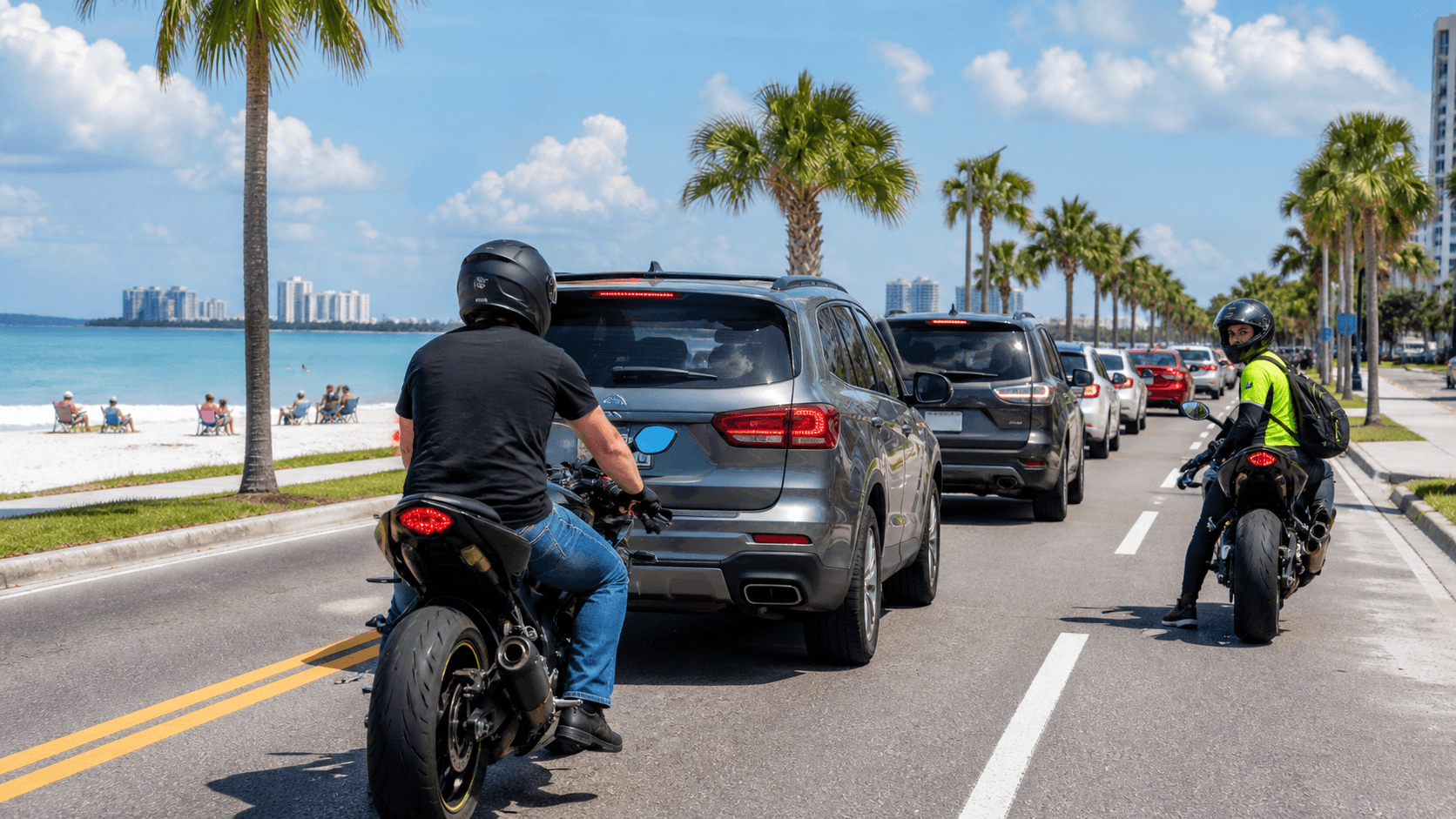
Summer in Tampa Bay means packed causeways, crowded beach roads, and long days on two wheels. Clearwater Beach, St. Pete Beach, Treasure Island, and the bridges that lead there all stay busy from breakfast through late night. For riders, that mix of traffic, tourists, and beach energy can turn a fun ride into a dangerous one in a second.
Late summer is especially tricky. There are more tourists squeezing in last-minute trips, families juggling back-to-school errands, and long weekends like Labor Day bringing extra visitors. Afternoon storms roll in, dry up, then hit again. All of this adds up to more chances for drivers to miss a motorcycle, change lanes without looking, or slam on the brakes.
Warm weather months see more motorcycles on the road, and around our beaches that also means more risk. Local riders deal with heavy traffic, tight lanes, and people who are not used to sharing the road with bikes. When you understand these seasonal dangers, you can ride smarter, lower your crash risk, and better protect your legal rights if someone hits you.
At Massaro Law, we are a local trial firm that knows these roads, these traffic patterns, and how insurance companies treat motorcycle cases in Tampa Bay and Pasco County. We see what happens when a happy beach day turns into an emergency, and we want riders to have clear, practical information before that happens.
Why Beach Traffic Makes Tampa Bay Risky for Riders
Our beach routes look beautiful, but they are some of the hardest places to ride safely.
Tourist traffic plays a big part in that. You have:
- Rental cars driven by people who do not know our bridges, causeways, or one-way streets
- Visitors making last-second lane changes for missed turns, hotel entrances, or beach parking lots
- Drivers who are distracted by GPS, kids, or the water, and not watching for motorcycles
Near beach bars and restaurants, drivers may be more focused on finding parking or meeting friends than checking their mirrors. A rider can be right beside them, and they never see the bike until it is too late.
Congested roads like Gulf Boulevard, Courtney Campbell Causeway, and the Howard Frankland Bridge often turn into stop-and-go lines of cars. In that mess, we see:
- Drivers drifting across lanes without signaling
- People staring at phones or the view instead of the road
- Rear-end hits and sideswipes when cars try to jump around slower traffic or stopped trolleys and buses
Then there are the parking lots and driveways. Beach areas are full of cars pulling in and out of:
- Pay-to-park lots
- Condo and hotel driveways
- Small side streets and beach access points
Drivers roll out without fully stopping, or they swing across several lanes for a sudden U-turn. Even at low speeds, a car cutting across a rider's path can throw the rider off the bike, causing serious injury.
Seasonal Factors That Quietly Increase Crash Risks
Beach traffic is only part of the story. Summer itself brings extra risk for motorcycle riders.
Heat, humidity, and long rides in the sun can wear a rider down. After hours in heavy gear and direct sun, your body and brain start to slow. That can mean:
- Slower reaction times
- Dizziness or a "foggy" feeling
- Trouble focusing when traffic suddenly changes
It is important for riders to drink water, take breaks in the shade, and wear cooling or breathable gear. When a driver cuts you off or hits the brakes, you want your mind sharp enough to react.
Afternoon storms are another big factor. In Tampa Bay, those quick storms can roll in fast, drop heavy rain, then move on. When they do:
- Visibility drops and drivers may not see a motorcycle's smaller profile
- Roads turn slick, especially where oil, sand, and water sit together
- Bridges and causeways become risky spots for hydroplaning
Good habits in these conditions include increasing your following distance, easing off the throttle when the first rain hits, and avoiding sudden braking or sharp turns on wet surfaces.
Night riding near the beaches has its own hazards. As the sun goes down, bars and restaurants fill up. That can mean:
- More impaired drivers leaving nightlife areas
- People misjudging how fast a motorcycle is going
- Drivers drifting over lane lines or stopping without warning
Extra space, slower speeds, and a careful eye on vehicles near bars and event venues can help lower your risk when you ride after dark.
Common Beach-Area Motorcycle Crashes and How to Avoid Them
Some types of crashes show up again and again near the beaches.
Left-turn and lane-change crashes are very common. A driver might turn left across oncoming motorcycles on Gulf Boulevard or at a causeway intersection. Or they may slide into your lane in slow, thick traffic. Riders can lower the risk by:
- Staying out of blind spots next to large vehicles
- Using lane position to stay visible in mirrors and not hidden behind other cars
- Watching wheels and front bumpers at intersections so you spot a turn before it happens
Rear-end crashes are another big problem in stop-and-go beach traffic. A car following too closely may slam into a slowing or stopped motorcycle. To help protect yourself:
- Tap or flash your brake lights early when you are slowing
- Leave an escape route to the side if the car behind you does not seem to be stopping
- Keep an eye on your mirrors every time you come to a stop
Dooring and parking lot collisions are also common. Beach visitors swing open car doors into traffic, and drivers back out of angled parking spots with poor visibility. Smart habits here include:
- Slowing down when you ride past a line of parked cars
- Leaving extra space from parked vehicles in tight areas
- Treating every parked car as if a door could open or a car could pull out without warning
Your Rights After a Tampa Bay Motorcycle Crash
When a motorcycle crash happens near the beaches, the legal side can be different from a typical car accident.
Riders often face unfair blame. Some people assume the motorcyclist was speeding or weaving, even when that is not true. Insurance companies may use that bias to try to reduce or deny a claim. At the same time, injuries from a motorcycle crash can be very serious, such as:
- Road rash and deep skin damage
- Broken bones and joint injuries
- Head injuries, even with a helmet
A motorcycle crash attorney in Tampa Bay can help gather key evidence, like witness statements, traffic camera footage, vehicle data, and records that show whether a driver was drinking before the crash.
Right after a crash, it is important to:
- Call 911 and get medical help
- Make sure a police report is done, even if the other driver says they are sorry
- Take photos of the scene, vehicles, skid marks, signs, and weather conditions, because beach scenes change fast
- Avoid saying anything that sounds like you are accepting blame
- Avoid giving recorded statements to any insurance adjuster before you speak with a lawyer
To protect the value of a claim, injured riders should keep track of medical visits, pain levels, and how the injuries affect work, sleep, and everyday life. Quick settlement offers often come before anyone truly understands the long-term costs of treatment, missed work, or future limits on riding and other activities. A local attorney can help calculate full damages and prepare a case for trial when needed.
How Massaro Law Helps Injured Riders Rebuild After Summer Crashes
At Massaro Law, we know the beach corridors of Tampa Bay and Pasco County from handling motorcycle and other injury cases. Our experience on routes near Clearwater Beach, St. Pete Beach, Madeira Beach, and coastal roads in Pasco helps us understand where and how these crashes happen. We also see how tourist-season traffic affects fault arguments, police reports, and how insurers try to spin the story.
Our firm is trial-focused. That means we build motorcycle cases with the idea that we might need to explain your story to a jury. That approach often pushes insurance companies to take a rider's injuries more seriously. We take time to listen to how the crash has changed your life, not just your medical records, and we work to bring out those details when we stand up for you.
Protect Your Rights After A Tampa Bay Motorcycle Crash
If you were hurt in a motorcycle collision, you do not have to face the insurance companies or medical bills alone. At Massaro Law, our motorcycle crash attorney in Tampa Bay can review your case, explain your options, and fight for the compensation you deserve. Reach out today to schedule a free, no-obligation consultation, or contact us with your questions so we can help you move forward.