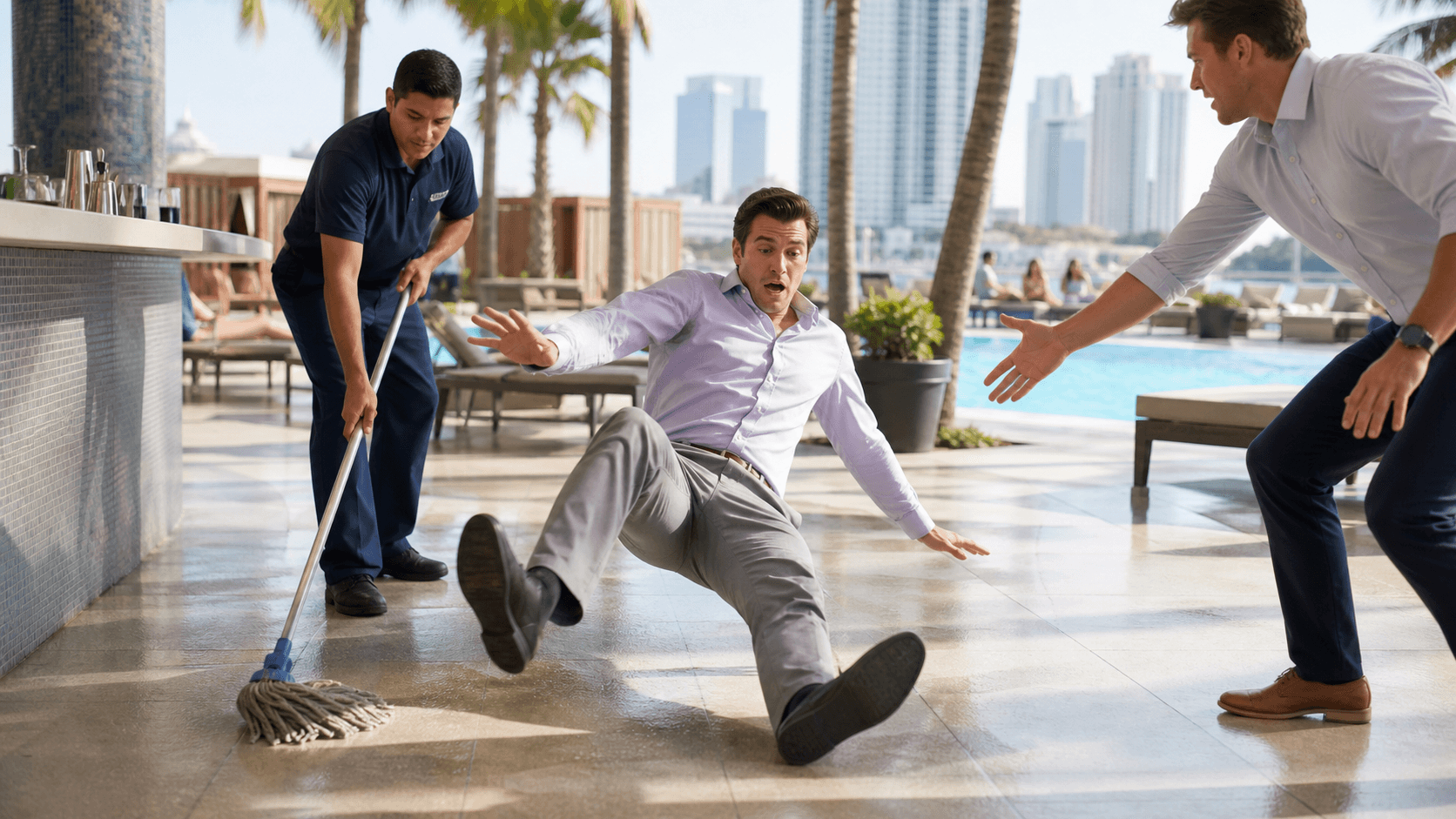
Why Summer Rain Makes Tampa Apartment Slip and Falls so Dangerous
Summer in Tampa Bay often means bright mornings and heavy afternoon rain. Those quick downpours and long, soaking storms can turn apartment communities into slippery obstacle courses. Wet walkways, shiny tile, and smooth stairs can go from safe to dangerous in a matter of minutes.
On apartment property, rainwater rarely stays where it lands. It can flow from parking lots toward sidewalks, pool decks, and mail areas. Water gets tracked from open lots and stairwells into covered breezeways, elevators, laundry rooms, and small indoor common spaces. Even areas with roofs and walls can have wet patches on the floor.
When apartment owners and managers know this kind of rain is common, but still do not handle wet-weather problems, people can get badly hurt. Broken bones, back injuries, and head trauma are all possible from a simple fall. In those situations, tenants and guests may have a valid slip and fall claim that a slip and fall attorney in Tampa Bay can review.
How Florida Law Treats Rainy-Day Slip and Falls
Under Florida law, apartment owners and management companies generally have a duty to keep shared areas reasonably safe for tenants and lawful guests. That duty applies throughout the property's common areas, including:
- Parking lots and walkways
- Stairs and landings
- Lobbies, mailrooms, and laundry rooms
- Breezeways, elevators, and community rooms
Rain in Tampa Bay is not a surprise; it is part of daily life for much of the year. Because of that, wet-weather dangers are usually considered foreseeable. For example, after a storm, covered breezeways can still become slick from tile or painted concrete, exterior stair treads may stay damp and smooth, and water can pool near mailrooms or elevator entrances.
If a dangerous condition exists long enough that the owner or manager should have discovered it and addressed it, the law may treat that as constructive notice. In other words, they cannot ignore a hazard that is obvious and ongoing.
Florida also follows comparative negligence rules, which means your own actions may be compared to the apartment owner's conduct. In these cases, issues sometimes raised include:
- Wearing shoes with poor traction
- Walking while looking at a phone
- Ignoring clear warning signs or cones
Even if a tenant shares some blame, that does not always mean they do not have a claim. It often still makes sense to speak with a slip and fall attorney in Tampa Bay who understands how these rules work.
Common Rain-Related Hazards on Apartment Property
During rainy months, many apartment properties deal with the same types of dangers because water and moisture collect in places that people use every day. Some of the most common rain-related hazards include:
- Slick exterior staircases, especially if the steps are painted or worn smooth
- Algae or mildew buildup on sidewalks, ramps, and shaded paths
- Poorly drained breezeways and landings that hold puddles
- Water tracked in from open parking lots into lobbies or hallways
Maintenance problems can make these conditions more dangerous. When basic safety features are missing or in disrepair, a minor slip can turn into a major fall. Examples include:
- Missing or broken handrails on stairs or ramps
- Worn or missing non-slip tape or strips on steps
- Dim or broken lighting that hides wet spots on the floor
- Broken or clogged gutters that let water sheet across walkways
Inside apartments and shared buildings, heavy rain can create hidden dangers too. After storms, you might see soaked entry mats that slide out from under your feet, no floor mats at doors that lead in from outside, or leaks from ceilings, windows, or balcony doors that leave puddles on tile or laminate floors.
Apartment owners and managers cannot control the weather. But they can control how they design, inspect, and maintain their property to reduce these predictable dangers.
What to Do Right After a Rainy Slip and Fall
Right after a fall, it is easy to feel embarrassed and want to get up quickly. Your health and safety need to come first. Even if you think you are okay, some injuries take hours or days to show their full impact.
If you slip and fall on wet apartment property, consider these steps:
- Get medical care as soon as you can, even for pain that feels mild
- Follow the advice of your medical providers
- Pay attention to new symptoms like headache, dizziness, or back pain
While the scene is still fresh, it can help to gather information about what happened. If you are able, or if someone can help you, try to:
- Take photos or video of the wet area, including any puddles or sheen on the floor
- Capture the lighting conditions and whether any warning cones or signs are present
- Photograph your footwear and any damaged clothing
- Note visible drainage issues, roof leaks, or gutter problems
It is also smart to:
- Get names and contact information for any witnesses or staff who saw the fall or the wet area
- Report the incident to apartment management in writing and keep a copy
- Save any incident reports, emails, or messages you receive
- Keep any damaged clothing or shoes in a safe place, and do not wash or repair them
Posting about the fall on social media can sometimes cause confusion later. Short comments or jokes made online can be taken out of context, so it is usually better to stay quiet about the details there.
Proving Negligence and Damages in These Claims
To bring a rain-related slip and fall claim, certain things usually must be shown. In general, an injured person often needs to prove that:
- There was a dangerous condition on the property
- The apartment owner or manager knew about it, or should have known about it
- They did not fix the problem or warn people in a reasonable way
- That failure directly caused the fall and the injuries
An experienced slip and fall attorney in Tampa Bay may look for many types of evidence to build the case. This can include property records and documentation, visual proof from the scene, and information showing whether the same problem happened before. Common examples include:
- Maintenance and cleaning logs for the area where you fell
- Surveillance video from cameras covering walkways, stairs, or entrances
- Records of prior complaints or similar incidents at the same spot
- Weather reports that show recent rain patterns
- Expert opinions about drainage design, flooring choices, or building code issues
When injuries are linked to the fall, the next step is showing the harm you suffered. Damages in these cases often involve both financial losses and the ways the injury affects daily life. Common categories of damages can include:
- Medical bills for emergency care, doctor visits, and medication
- Future treatment needs, like physical therapy or surgery
- Lost wages if you miss work while you heal
- Loss of earning capacity if you cannot return to the same kind of work
- Out-of-pocket costs, like medical equipment or transportation
- Pain and suffering, including long-term limits on movement and daily activities
Careful documentation makes it easier to show how the fall has changed your life, both now and in the future.
Protect Your Rights After a Rainy Fall at Your Apartment
Acting quickly after a wet-weather fall on apartment property can make a big difference. Timely medical care creates a clear record that links your injuries to the incident. Taking photos and saving physical items keeps evidence from being lost or changed. Getting written records, such as incident reports and medical notes, helps tie everything together.
Florida law also sets deadlines for bringing personal injury and premises liability claims. Waiting too long can affect your options, even if your injuries are serious. Many tenants and guests choose to talk with a trial-tested slip and fall attorney in Tampa Bay who understands how local rain patterns, drainage problems, and apartment maintenance practices all connect in these cases.
At Massaro Law, we focus on representing people who are hurt in negligence cases across Tampa Bay, including rainy-day apartment slip and falls. We are a trial firm, and we take the time to learn what happened, explain your options in clear language, and prepare each case with the courtroom in mind, even if it may settle before trial.
Protect Your Rights After a Slip and Fall Injury
If you were hurt in a fall on someone else's property, you do not have to sort out medical bills and insurance negotiations alone. An experienced slip and fall attorney in Tampa Bay at Massaro Law can review what happened, explain your options, and take on the legal details while you focus on healing. We will evaluate the strength of your claim and outline a strategy aimed at pursuing the compensation you may be entitled to receive. To schedule a confidential consultation, contact us today.