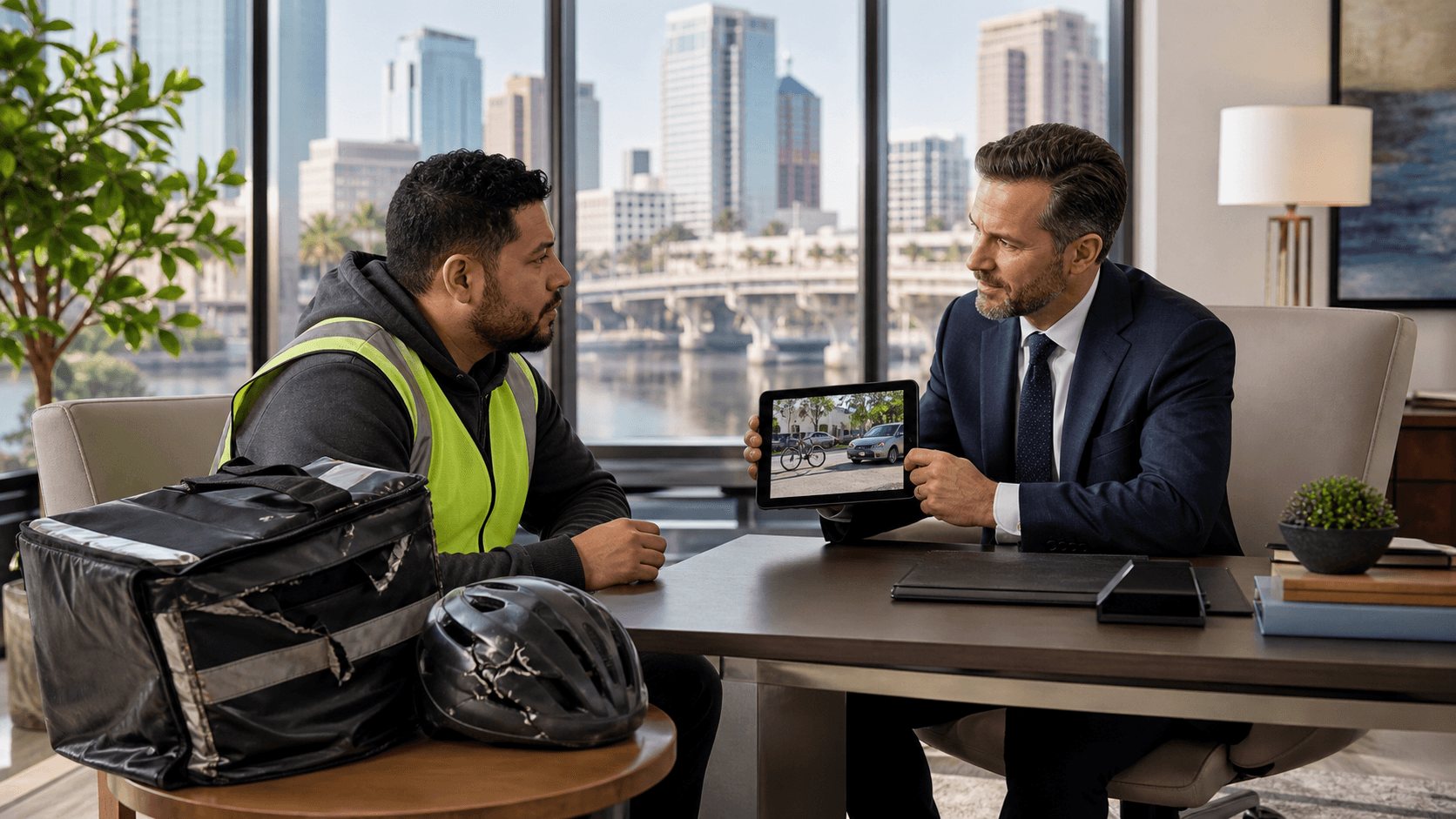
Protecting Your Rights After a Tampa Bay Rideshare Crash
Rideshare and delivery apps keep Tampa Bay moving. Many people in our area pick up extra income delivering food, groceries, and packages through apps like Uber Eats, DoorDash, Grubhub, Instacart, and others. It can be fast-paced work with a lot of time on our busy roads.
Summer brings even more pressure. Tourist traffic picks up around the beaches and downtown areas, rainstorms roll in fast, vacationers stare at their phones for directions, and late night orders spike around July and August. All of this creates more chances for crashes, especially for drivers who are on the road for long stretches.
When a delivery driver is hurt in a rideshare-related accident, the first question is often, "Who is going to pay for this?" Insurance companies may point fingers at each other, the app, or even at you. That is when a rideshare accident attorney in Tampa Bay can help protect your income, your vehicle, and your health.
Understanding Your Legal Status as a Delivery Driver
Most delivery and rideshare platforms call drivers "independent contractors." This label matters. It usually means the company treats you as self-employed, not as an employee. So you may not have:
- Employer-sponsored health insurance
- Traditional workers' compensation coverage
- Paid time off if you cannot drive
You are often expected to carry your own auto insurance and take care of your own expenses. But things get tricky when you are in a crash while working on the app.
Your status at the time of the wreck can change which insurance policy applies. In general:
- Logged out of the app: you are driving for personal reasons, so your personal policy is usually on the hook.
- Logged in and waiting for an order: some apps provide limited coverage during this period, but your personal insurer may still be involved.
- Actively picking up or dropping off an order: many apps offer higher commercial coverage during active deliveries.
Florida uses an at-fault system. That means the driver who is mostly at fault, or their insurer, is generally responsible for paying for injuries and damage. Florida also uses comparative negligence rules. If you are found partly at fault, your compensation can be reduced by your percentage of blame. So if an insurance company argues that you were speeding, distracted, or rushed because of delivery deadlines, it can cut into what you recover. This is one reason careful investigation and legal guidance matter.
Who Pays After a Rideshare Delivery Accident.
After a delivery crash in Tampa Bay or Pasco County, there may be several layers of insurance involved:
- Your personal auto insurance
- The app's commercial or contingent policy
- The at-fault driver's insurance
Different situations can lead to different coverage outcomes.
- You are hit while logged into the app but waiting for a delivery
The app may offer limited liability coverage during this "online but no active order" period. This can help if you cause a crash and someone else is hurt. For your own injuries, you often still look to your own policy first, plus any coverage from the at-fault driver.
- You are on the way to pick up or drop off an order
Many platforms provide higher liability and sometimes uninsured or underinsured coverage while you are actively on a trip. This can be important if the at-fault driver has little or no insurance. The challenge is proving you were on an active delivery at the exact time of the crash.
- You are off the app on personal time
In that case, it usually works like any other car crash. Your personal policy applies, and claims go through your insurer and the at-fault driver's insurer.
Common coverage fights include:
- Personal carriers denying claims because you were using the car for "business use"
- App companies trying to say you were not truly on an active trip
- Other drivers' insurers arguing that you were distracted by the app or speeding to make a delivery
Sorting through these arguments and the fine print in each policy can be stressful if you are also trying to heal.
Steps to Take Immediately After a Delivery Crash
Right after a crash, your safety is the most important thing, especially with sudden summer storms and low visibility. If you can:
- Move yourself and your vehicle to a safe place away from traffic if it is safe to do so
- Call 911 so police and paramedics can come to the scene
- Get medical attention, even if you feel "mostly fine"
Injuries like whiplash or a concussion can start with mild symptoms, then get worse. Prompt care also creates a medical record that links your injuries to the crash.
When things are under control, try to:
- Take photos and video of all vehicles, skid marks, road conditions, and any nearby signs or signals
- Collect names and contact information for witnesses
- Save screenshots from your delivery app that show trip details, timestamps, pay, and any messages with the customer or support
- Preserve dashcam footage if you have it, and back it up so it is not lost
It also helps to report the crash through the app in the way it requires, but be careful about what you say.
There are a few things you should avoid:
- Do not apologize or guess about what happened
- Do not give recorded statements to any insurance company without legal guidance
- Do not accept a quick settlement offer before you understand your injuries and your rights
Once you accept a settlement, you usually cannot go back for more if your condition worsens.
How a Tampa Bay Attorney Protects Delivery Drivers
Crashes that involve delivery apps are rarely simple. An experienced rideshare accident attorney in Tampa Bay can step in so you are not trying to handle everything alone while you are hurt.
A lawyer can help by:
- Getting app records that show when you logged in, accepted an order, and completed it
- Requesting traffic camera footage, black box data from vehicles, and sometimes cell phone logs
- Working with medical providers to understand your injuries and long-term limits
Delivery income can be complicated. Many drivers work on more than one app, rely on tips, and may lose chances at bonuses or get deactivated after a crash. An attorney can help collect:
- App histories and weekly earnings reports
- Tip records
- Proof of lost hours or forced breaks from driving
This information is important when asking for payment for lost income and future earning capacity.
On the insurance side, your lawyer can:
- Sort through overlapping policies and figure out who is responsible
- Push back when insurance companies try to blame you without proof
- Negotiate for coverage of medical bills, therapy, prescriptions, vehicle repairs, and pain and suffering
If fair payment is not offered, a trial attorney can prepare your case for court and present your side to a judge or jury.
Take Control of Your Rideshare Delivery Claim Today
Time is not on your side after a delivery crash in Tampa Bay or Pasco County. Florida law gives only a limited window to bring a claim. At the same time, evidence can disappear. Road debris gets cleared, cars are repaired or scrapped, app data may be purged, and witnesses become harder to find.
If you are a delivery driver who has been hurt, it helps to start gathering what you can while it is still fresh:
- Screenshots of your trips and earnings
- Any medical records or bills so far
- Photos of your vehicle damage
- Notes about how the crash has changed your daily life and your ability to work
At Massaro Law, we focus on helping injured people in the Tampa Bay and Pasco County areas, including drivers working through rideshare and delivery apps. We understand how important your car and your body are to your income. Our goal is to shoulder the legal burden so you can focus on healing and planning your return to the road when you are ready.
Protect Your Rights After a Rideshare Crash
If you were injured in an Uber or Lyft collision, you do not have to navigate confusing insurance policies alone. As your trusted rideshare accident attorney in Tampa Bay, Massaro Law will evaluate your case, explain your options, and pursue the compensation you deserve. Contact us today or use our online form to contact us and speak with our team about your next steps.