Big trucks are a normal sight on Tampa Bay roads, especially around summer holidays like the Fourth of July. More tourists, more beach trips, and more deliveries all crowd into the same lanes. When that happens, the blind spots around big rigs turn into deadly danger zones for drivers, riders, and pedestrians who never even see the truck coming.
In this article, we explain where truck blind spots hide, how these crashes happen, who may be legally responsible, and what steps can help protect your rights afterward. Our goal is to make a confusing and scary situation easier to understand, so you can make smarter choices if you or someone you love is hurt.
Deadly Blind Spots Lurking Around Big Rigs
Truck blind spots, also called no-zones, are the areas around a big truck where the driver cannot see other vehicles, even when using mirrors. These no-zones are much larger than the blind spots on a regular car. A small car, motorcycle, or bicycle can disappear completely in these spaces.
Around holidays and peak travel times, Tampa Bay roads see:
- More out-of-town drivers unfamiliar with local routes
- Heavier delivery schedules around fireworks, food, and retail shipments
- Crowded lanes near beaches, stadiums, and downtown events
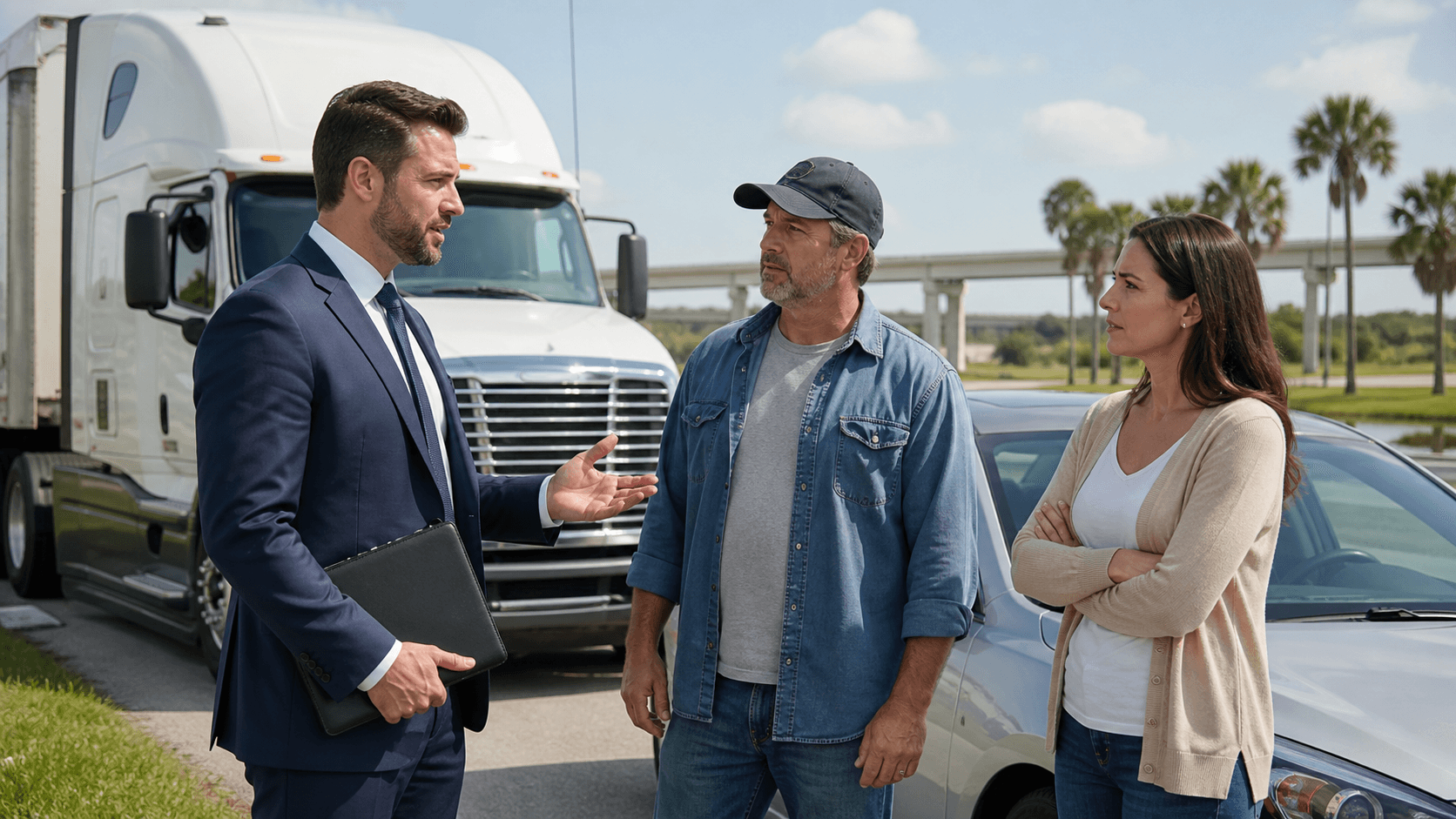
When traffic gets tight, blind spots get more dangerous. If a crash happens, more than one person or company may share legal responsibility. A truck accident attorney in Tampa Bay helps injured people sort out who may be at fault and which insurance policies may apply.
Where Truck Blind Spots Hide on Tampa Bay Roads
There are four main blind spot zones around large trucks:
- Directly in front of the cab, where the truck sits so high it can hide a small car
- Directly behind the trailer, where the driver cannot see vehicles tailgating or following too closely
- Along the right side, stretching across several lanes and running almost the full length of the trailer
- Along the left side near the middle of the trailer, especially dangerous during lane changes
These blind spots are especially risky on Tampa Bay's biggest routes, like I-275, I-4, the Howard Frankland Bridge, Gandy, and the Selmon Expressway. On these roads, drivers change lanes often, traffic speeds vary, and space to escape a moving truck can be limited.
A common myth is, "If I can see the truck's mirror, the driver can see me." In real life, that is not always true. Florida traffic can be heavy, mirrors may be dirty or misaligned, and sun glare or rain can block the driver's view. Just because you see the mirror does not guarantee you are safely visible.
How Blind Spot Truck Crashes Happen in Tampa Bay
Blind spot crashes can happen in many ways, including:
- Lane-change sideswipes when a truck moves over and pushes a car, motorcycle, or bicycle sideways
- Underride collisions in slow beach or causeway traffic when a smaller vehicle slides under the rear of a trailer
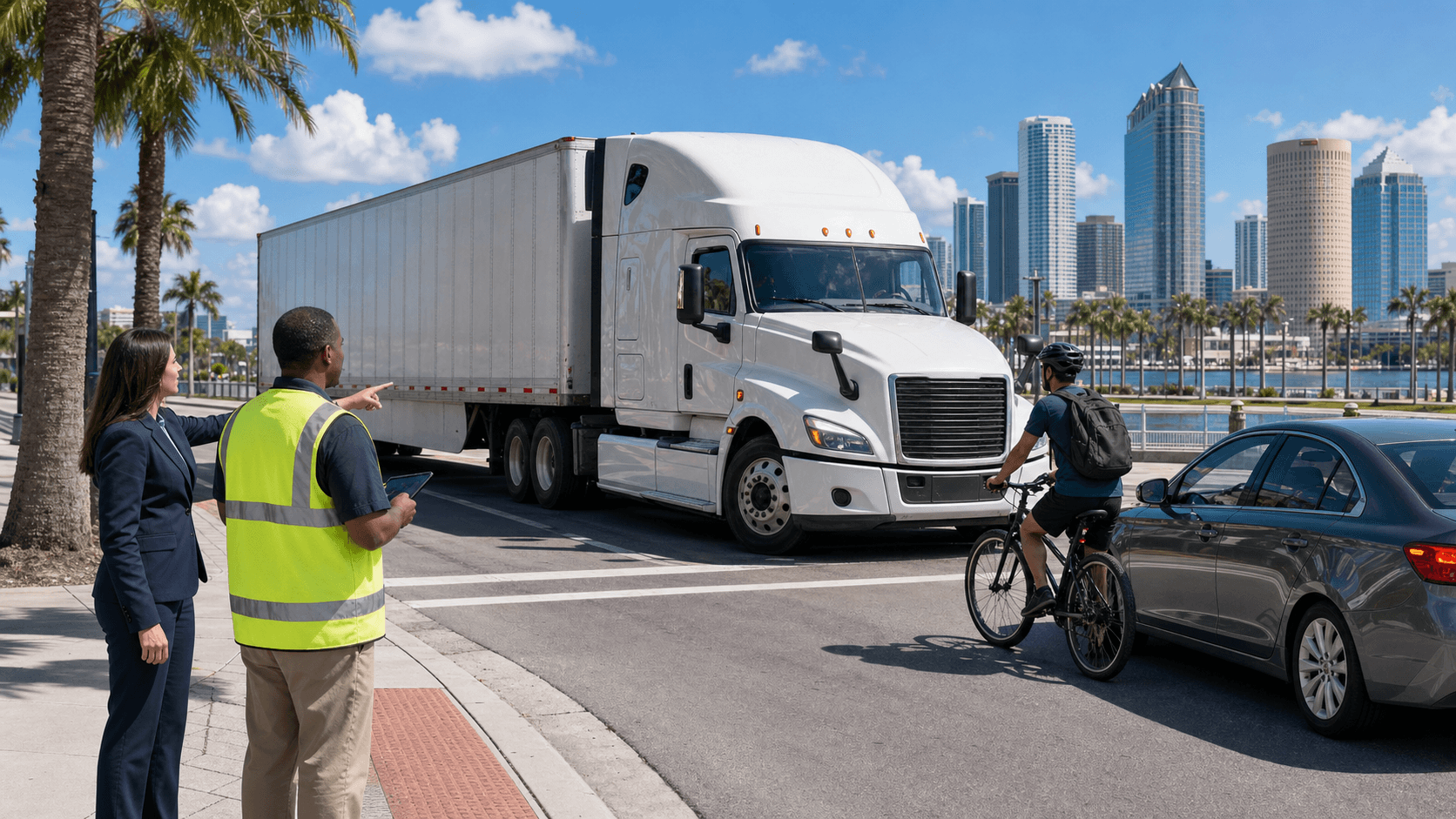
- Wide right turns in city streets, trapping cars, bikes, or pedestrians between the trailer and curb
- Merging crashes near ramps, toll plazas, and bridge entrances when a truck and another vehicle try to move into the same space
Florida adds its own mix of trouble. Sudden summer storms can cut visibility fast. Heavy tourist traffic near beaches and hotels crowds the right lanes with out-of-town drivers, bicyclists, and scooters. Motorcycles are common near the coast, especially at night, and can vanish in side blind spots.
Because commercial trucks are so large and heavy, injuries are often severe. Common injuries include brain injuries, spinal cord damage, broken bones, internal injuries, and wrongful death. Even at moderate speeds, the force of a truck-impact can crush a smaller vehicle in seconds.
Who May Be Liable When You Never Saw the Truck Coming
In a blind spot crash, several different parties may share legal responsibility, depending on what happened.
The truck driver may be at fault for:
- Unsafe lane changes or failing to signal
- Speeding or following too closely
- Distracted driving, like looking at a phone or GPS
- Failing to check mirrors or cameras properly
The trucking company may also share blame, for example, if it:
- Pressured drivers to rush deliveries or skip rest
- Hired drivers without proper checks or training
- Ignored safety complaints or past violations
Maintenance providers can be responsible if they failed to keep mirrors, cameras, lights, or brakes in safe working order. Cargo loaders, shipping brokers, or even makers of defective safety equipment can also be involved in some cases.
Florida uses a modified-comparative negligence system. That means your compensation can be reduced if you are found partly at fault, such as being accused of lingering in a blind spot. Insurance companies often push this argument. An experienced truck accident attorney in Tampa Bay can review the facts and push back when blame is unfair.
Proving Fault After a Truck Blind Spot Crash
Proving what really happened requires fast and careful work. Key evidence can include:
- Dashcam video from your car or the truck
- Telematics and black box data from the truck on speed, braking, and steering
- Driver logs, GPS records, and route information
- Maintenance and inspection reports
- Photos, videos, and witness statements from the crash scene
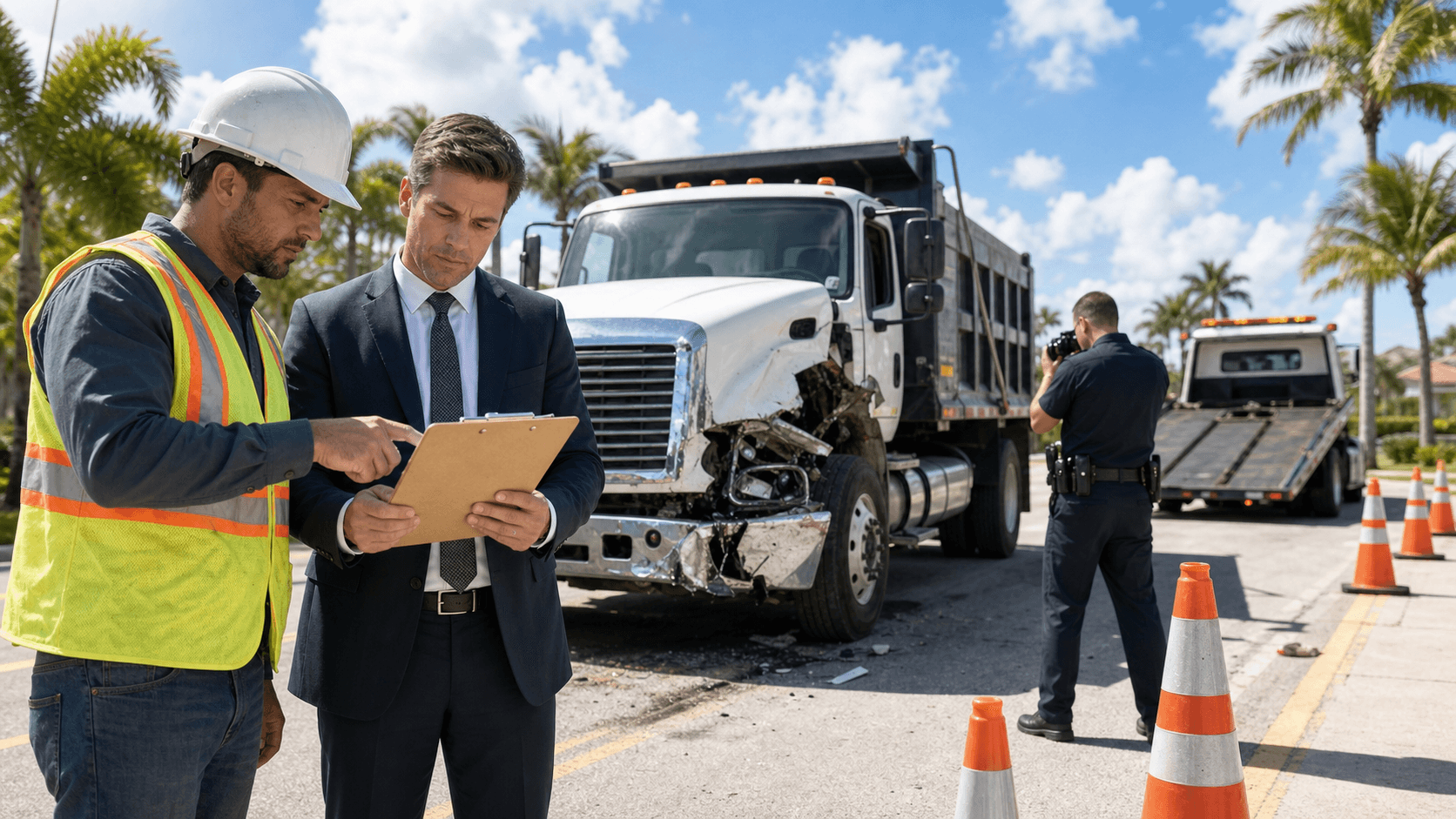
Accident reconstruction experts can study skid marks, damage patterns, and road design to show how a blind spot played a role. Experts may also review where mirrors and cameras were placed and how the company trained its drivers on blind spots and lane changes.
Some evidence does not last long. Surveillance video can be erased, vehicles get repaired or destroyed, and electronic data can be lost. That is why a rapid legal investigation is so important. A truck accident attorney in Tampa Bay can send preservation letters, request the data, and build a strong claim before key proof disappears.
Steps to Take After a Suspected Blind Spot Collision
Right after a truck crash, safety comes first. A simple checklist can help:
- Call 911 and report the crash
- Move to a safe place if you can do so without making injuries worse
- Ask for medical help, even if you feel "okay" at first
- Take photos and videos of the scene, vehicles, road signs, and any visible injuries, if it is safe
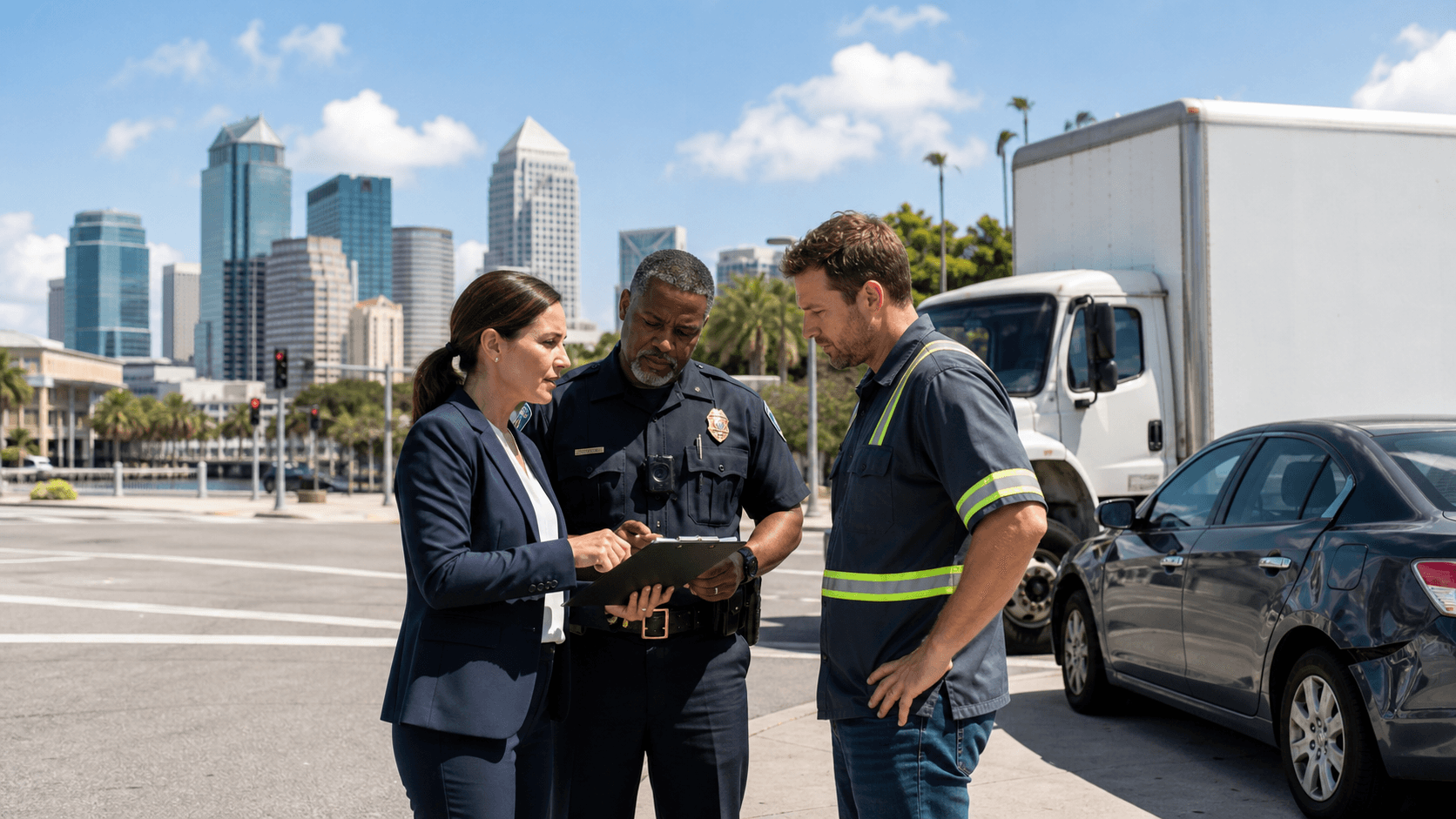
Try to collect information from the truck driver, such as the company name, DOT number, and insurance details. Get names and contact information for any witnesses. Stay calm and avoid arguing or apologizing. Simple phrases like, "I will let my insurance and attorney handle this," are often best.
Let your insurance company know about the crash quickly but be careful with recorded statements or broad releases. Trucking and insurance companies may offer a fast settlement that does not cover long-term medical needs or lost income. Talking with a lawyer before signing anything can help you understand your options.
Protect Your Rights After a Tampa Bay Truck Blind Spot Crash
After a blind spot crash, many people blame themselves just for being in the wrong place at the wrong time. But you are not expected to predict every move of a commercial truck, and you are not automatically at fault just because you were in a no-zone.
At Massaro Law, we know the roads, bridges, and traffic patterns around Tampa Bay, and we understand the tactics trucking and insurance companies use to limit what they pay. When we take on a truck blind spot case, we work to identify every responsible party and seek full compensation for medical bills, lost income, pain and suffering, and wrongful death losses for grieving families.
Protect Your Rights After A Truck Accident Today
If you were injured in a crash with a commercial vehicle, you do not have to navigate the medical bills, insurance calls, and lost wages alone. As a dedicated truck accident attorney in Tampa Bay, Massaro Law can step in quickly to preserve critical evidence and advocate for your full compensation. We will review your situation, explain your legal options in plain language, and outline a clear strategy tailored to your case. To schedule a confidential consultation, please contact us today.